GPT-5.5 arriving in Microsoft Foundry is not just another model announcement.
It changes the Azure AI platform decision from "which model should I use?" to "where should enterprise agents actually live?"
That distinction matters. Most organisations still treat frontier models as interchangeable APIs. They compare benchmark scores, run a few prompts, check the token price, and then pick the model that looks best that week.
That approach worked when AI projects were prototypes. It does not work when agents start touching codebases, documents, line-of-business systems, and production workflows.
The Model Is No Longer the Architecture
Microsoft's announcement positions GPT-5.5 as a frontier model for professional work: deeper long-context reasoning, more reliable agentic execution, better computer-use accuracy, and stronger token efficiency.
GPT-5.5 Pro sits above it for heavier reasoning and more demanding enterprise workloads.
Those capabilities are important, but they are not the main architecture point.
The main point is that GPT-5.5 lands inside Microsoft Foundry, not beside it.
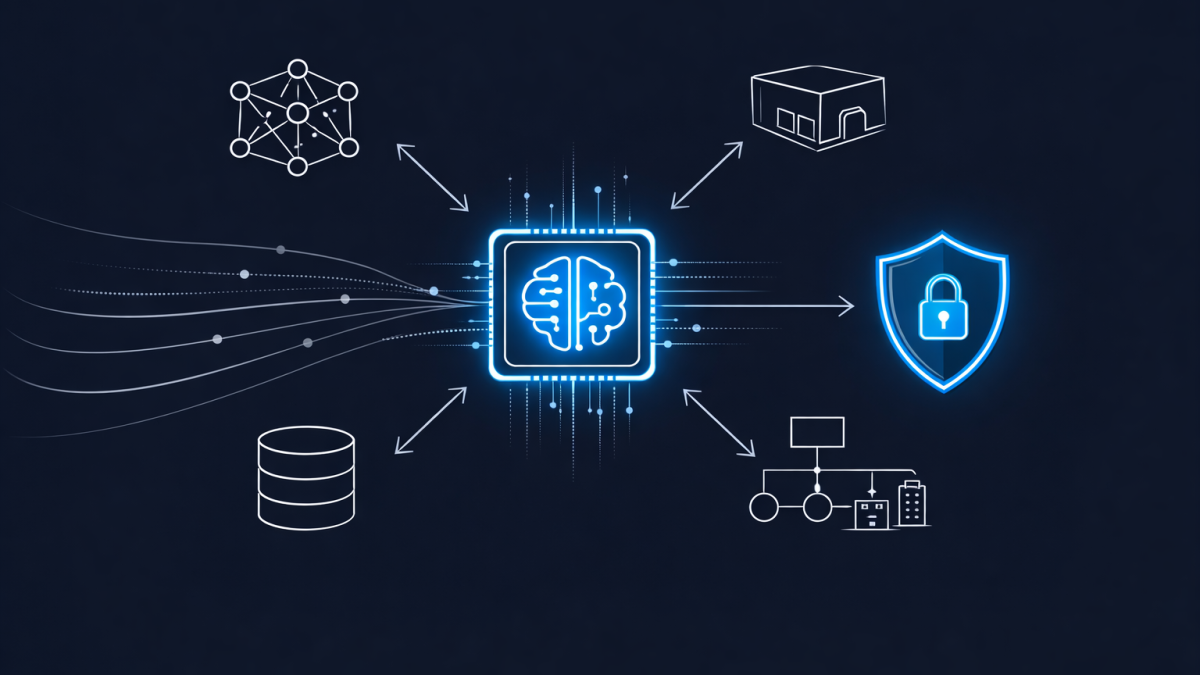
That means the model is surrounded by the platform decisions enterprise architects care about: identity, isolation, agent hosting, observability, model access, governance, tool connections, and cost control.
In practice, this is where the decision shifts. You are no longer just deciding whether GPT-5.5 is better than GPT-5.4, Claude, Gemini, Mistral, or an open model for a specific task.
You are deciding whether Foundry becomes the operating layer for production AI workloads.
Why Foundry Becomes More Important Than the Model Picker
Foundry already gives Azure customers a broad model catalog, evaluation tooling, agent services, hosted agents, model routing, and governance controls.
The model catalog is useful. The routing is useful. The ability to compare models is useful.
But once GPT-5.5-level capability becomes available, the biggest risk is not picking the wrong model. The bigger risk is letting every team build its own AI runtime around the right model.
I have seen this pattern before.
One team uses a direct API integration. Another builds on LangChain. Another uses Semantic Kernel. Another creates a custom agent framework because they need one special integration. Six months later, the CIO has five AI stacks, inconsistent logging, no shared policy model, and no clean answer to "which agents are allowed to do what?"
Foundry is Microsoft's answer to that fragmentation.
The question is whether organisations are ready to treat it that way.
GPT-5.5 Makes Agents More Real
The part of the announcement that caught my attention was not only the long-context reasoning. It was the emphasis on persistent professional work.
GPT-5.5 is described as better at multi-step engineering tasks, root cause analysis, reasoning across large systems, and anticipating downstream testing and review requirements.
That is exactly where agent architecture gets serious.
A chatbot can be tolerated when it makes a weak suggestion. A coding or operations agent cannot be treated so casually. If it can inspect a system, propose a fix, update artefacts, and interact with tools, the platform around it becomes part of the control boundary.
Identity matters. File system isolation matters. Audit trails matter. Tool permissioning matters. Recovery behaviour matters. Evaluation matters.
This is why hosted agents in Foundry are significant. The ability to land agents in isolated sandboxes with persistent file systems, Microsoft Entra identities, and scale-to-zero pricing is not a developer convenience. It is an enterprise architecture primitive.
The stronger the model gets, the more important that primitive becomes.
The Cost Conversation Also Changes
The published pricing is not cheap in the abstract: GPT-5.5 at $5 per million input tokens, $0.50 per million cached input tokens, and $30 per million output tokens. GPT-5.5 Pro is much higher again at $30 input, $3 cached input, and $180 output.
Those numbers will scare some teams.
They should not be ignored. But they should also not be read in isolation.
The real cost question is not "is GPT-5.5 expensive?" It is "which workflows justify frontier reasoning, and how do we prevent every workload from using it by default?"
That is where Foundry's platform role matters again.
If model routing, evaluation, cached inputs, quota controls, and observability are handled centrally, GPT-5.5 becomes a premium capability inside a managed architecture. If every application team calls it directly, it becomes a budget incident waiting to happen.
Enterprise AI cost control is going to look much more like cloud architecture than software licensing. You need tiers. You need policy. You need usage telemetry. You need a clear reason for when GPT-5.5 Pro is justified and when a smaller model is the better engineering answer.
The Azure Decision Is Now a Platform Decision
For Azure customers, GPT-5.5 in Foundry strengthens a familiar argument: keep AI close to the identity, data, network, governance, and developer tooling already used across the enterprise.
That does not mean every organisation should become single-vendor by default. Multi-model and multi-vendor strategies still matter. I would be cautious about any architecture that assumes one frontier provider will always be best at every task.
But there is a practical difference between model optionality and platform fragmentation.
Model optionality is healthy. Platform fragmentation is expensive.
Foundry is trying to give Azure customers the first without creating the second.
That is the decision architecture teams should be debating now. Not whether GPT-5.5 wins a benchmark this week. Not whether the Pro model is worth its price for every use case. Those are workload-level decisions.
The platform decision is bigger: where will model selection, agent hosting, policy enforcement, observability, and cost governance live?
My Take
GPT-5.5 makes Microsoft Foundry more strategically important because it raises the ceiling on what Azure-hosted agents can do.
But the real shift is not the model itself. It is the fact that frontier model capability is becoming embedded inside enterprise platform controls.
That is where production AI is heading.
The organisations that treat GPT-5.5 as another API will get short-term excitement and long-term sprawl. The organisations that treat it as a forcing function for platform architecture will get something more durable: a cleaner way to build, govern, observe, and pay for AI systems as they become part of real work.
For me, that is the architecture takeaway.
The model is impressive. The platform decision is more important.
