Microsoft's Azure Accelerate for Databases announcement looks like a migration program.
I don't think that is the real story.
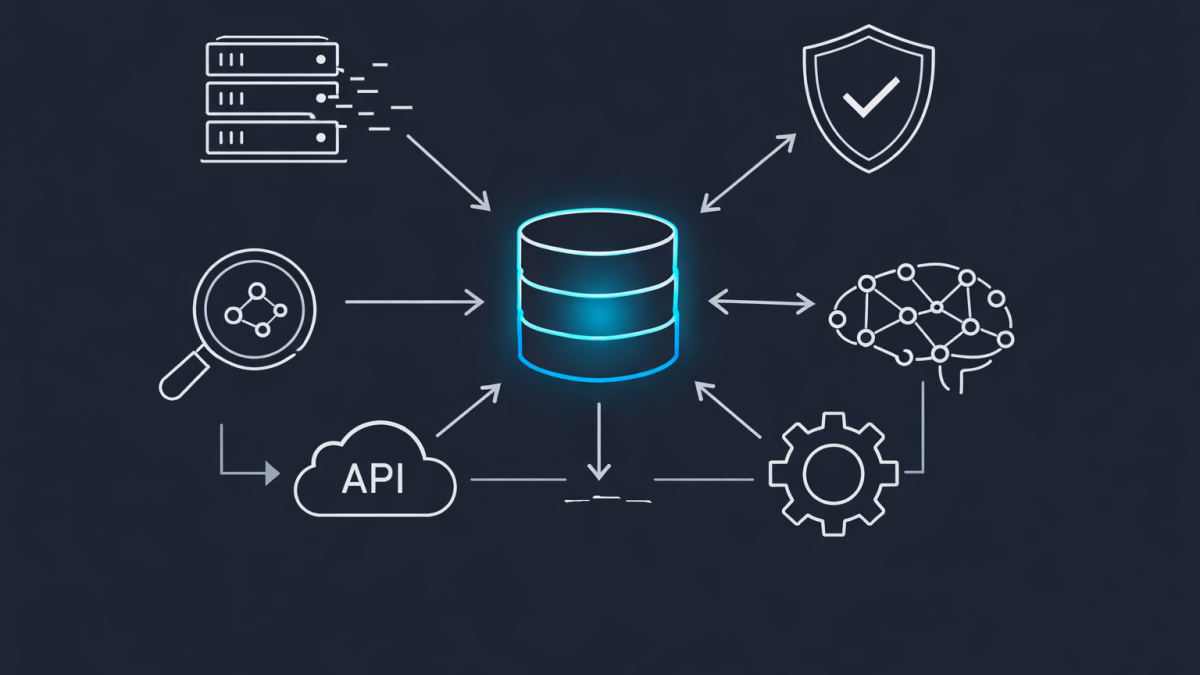
The more interesting signal is that Microsoft is treating database modernization as an AI readiness problem. Not a licensing problem. Not a generic cloud migration problem. An AI data gravity problem.
That distinction matters, because most enterprise AI programs are now discovering the same uncomfortable truth: the model is not the hard part. The data estate is.
AI pilots are running into old database decisions
Every enterprise wants better AI outcomes. Better copilots. Better agents. Better analytics. Faster decisions.
Then the architecture team opens the data estate and finds the real blocker.
Critical data sits across legacy SQL Server estates, aging Oracle platforms, custom line-of-business databases, poorly documented reporting stores, and data marts that nobody wants to touch because they still feed a finance process from 2014.
This is where AI ambition meets data gravity.
The closer the workload gets to production, the more the model has to move toward the data. But if the data is fragmented, expensive to query, hard to secure, or trapped in operational systems that were never designed for real-time AI access, the AI architecture becomes a workaround factory.
You can build a proof of concept around that. You cannot build an enterprise AI operating model around it.
Microsoft's message is blunt: AI is only as strong as your data
The Azure Accelerate for Databases page opens with a simple line: AI is only as strong as your data.
That is obvious and still underappreciated.
Microsoft's announcement points to Gartner research saying 60% of AI projects unsupported by AI-ready data will be abandoned. It also cites a commissioned Forrester study where 75% of organisations that migrated to Azure reported significantly reduced barriers to AI and machine learning.
The numbers are useful, but the pattern is more important.
AI-ready data is not just clean data. It is data that can be secured, governed, queried, scaled, observed, and connected to intelligent applications without every project becoming a bespoke integration exercise.
That is why database modernization is suddenly back on the strategic agenda. It is not because CIOs woke up excited about migration waves. It is because agents and copilots are exposing the cost of leaving the data layer behind.
Azure Accelerate is packaging the parts teams usually struggle to coordinate
The practical shape of the program is straightforward.
Azure Accelerate for Databases brings together Microsoft Cloud Accelerate Factory delivery support, Azure specialised partner expertise, AI-enhanced assessments and tooling, savings plans, delivery funding, Azure credits, and role-based skilling.
Individually, none of those ideas are shocking.
Together, they address the real reason database modernization programs stall: they are not only technical projects. They are funding problems, skills problems, risk problems, and coordination problems.
I have seen technically sound database modernization plans sit untouched because the business case was hard to sequence. I have seen teams know exactly what needed to move, but lack the delivery capacity to do it safely. I have seen cloud adoption programs focus on compute and landing zones while the database estate stayed where it was because nobody wanted to touch the most sensitive workloads first.
Azure Accelerate is Microsoft's attempt to remove friction from all of those layers at once.
That is the right move, because AI-readiness work fails when it is treated as a sequence of disconnected projects. The database platform, cost model, migration approach, skills plan, security model, and application roadmap all have to move together.
The savings plan matters because AI data demand is not static
One of the more practical parts of the announcement is the savings plan for databases.
Microsoft says customers may save up to 35% compared with pay-as-you-go for eligible database workloads, with the exact savings depending on service, region, and usage. The important part is not the headline percentage. It is the spend-based model.
Traditional reservations work well when workloads are predictable. AI changes that assumption.
Once organisations start building agents, semantic search, event-driven analytics, and retrieval-heavy applications, database consumption patterns can shift. A workload that used to serve a fixed application may suddenly support embeddings, indexing, agent memory, operational analytics, or new customer-facing features.
That kind of demand does not always map cleanly to a static reservation.
A more flexible savings model makes sense if Microsoft wants customers to modernize without feeling locked into yesterday's database shape. It also gives FinOps teams a better way to support experimentation without abandoning cost discipline.
But this still needs architecture judgment. Savings plans are not a substitute for workload analysis. Before committing spend, I would still want to understand service mix, growth patterns, read/write behaviour, regional placement, and how AI workloads will change the access profile over time.
The point is not to chase a discount. The point is to make modernization economically survivable while the data platform evolves.
The Thomson Reuters example is really a scale lesson
Microsoft highlighted Thomson Reuters migrating more than 18,000 databases and over 500 terabytes of data to Azure SQL Managed Instance.
That is the kind of example architects should pay attention to, not because every organisation has that scale, but because it shows what database modernization looks like when it is treated as a platform transition rather than a one-off migration.
The business driver was not simply "move databases to Azure." It was performance, scalability, resilience, and the ability to keep improving the platform after the migration.
That matters for AI because a modern data foundation is not just about where the database runs. It is about whether the platform can keep absorbing new requirements without collapsing under operational complexity.
AI programs create pressure in unexpected places. They need fresher data, stronger access controls, better observability, more consistent performance, and faster provisioning for new workloads. Legacy database estates can support some of that for a while, but usually by adding more exceptions.
At scale, exceptions become the architecture.
Data gravity is now an AI architecture problem
For years, data gravity was mostly discussed in cloud migration terms. Data accumulates mass. Applications orbit around it. Moving it becomes harder over time.
AI makes that problem sharper.
Agents need context. Retrieval systems need indexed knowledge. Analytics workflows need current signals. Governance teams need auditability. Security teams need clear boundaries. Developers need usable APIs. Business teams want outcomes quickly.
All of that pulls compute, models, tools, and workflows toward the data estate.
If the data estate is modern, governed, and cloud-ready, that pull can be productive. If it is fragmented and brittle, that pull creates friction everywhere else.
This is why I think Azure Accelerate for Databases is more strategic than it first appears. Microsoft is not only trying to win migration projects. It is trying to make Azure the place where enterprise data gravity becomes useful for AI instead of obstructive.
That is the real platform play.
What I would ask before using the program
If I were assessing Azure Accelerate for Databases for an enterprise estate, I would not start with the incentive model.
I would start with five architecture questions.
First, which databases are actually blocking AI or analytics outcomes?
Second, which workloads need modernization because of operational risk, not because they are fashionable migration candidates?
Third, which data needs to support agents, search, reporting, and real-time decisioning over the next two years?
Fourth, what governance model will apply after the database moves?
Fifth, how will the cost model change once AI workloads start querying, indexing, and enriching the data more frequently?
Those questions keep the conversation honest.
The worst version of this program would be treating it as a migration coupon. The best version is using it to prioritise the parts of the data estate that genuinely constrain AI, resilience, and application modernization.
The bigger lesson for architects
Azure Accelerate for Databases confirms something I have been seeing across enterprise AI work: the next wave of AI architecture will be less about prompts and more about platforms.
Prompt quality still matters. Model selection still matters. Agent orchestration still matters.
But the organisations that move from AI pilots to durable AI capability will be the ones that modernize the systems underneath the demos.
That means identity. Governance. Observability. Cost control. Integration patterns. And yes, databases.
Microsoft's announcement is a reminder that database modernization has changed categories. It is no longer only a cloud efficiency project. It is becoming part of the AI readiness stack.
For architects, that should change the roadmap.
The question is no longer "which databases should we migrate?"
The better question is: "which data foundations will our AI strategy depend on, and are they ready to carry that weight?"
