The Claude Code leak is not interesting because Anthropic accidentally exposed source code.
That part is embarrassing, but it is not the real story.
The real story is what the leaked code appears to show about how much context an enterprise coding agent can collect, store, and potentially send upstream when teams let it operate with broad access and weak boundaries.
I think many technical leaders are still evaluating AI coding tools as if they are just better autocomplete.
They are not.
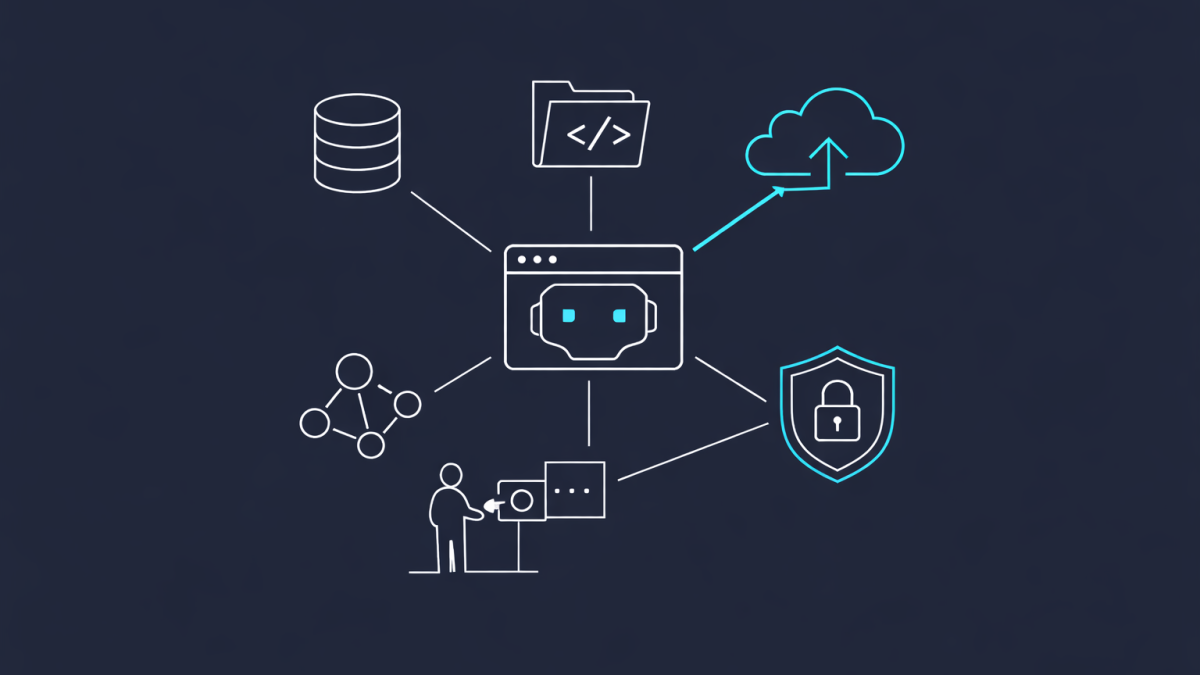
They are operational systems with memory, tool access, telemetry paths, policy controls, update channels, and growing authority over local development workflows. Once you look at them that way, the Claude Code story stops being vendor gossip and starts looking like a useful architecture lesson.
What Actually Happened
The immediate issue was a packaging mistake.
According to reporting from The Register, a Claude Code npm release included a source map that pointed back to an archive containing a large portion of the product’s TypeScript source. Anthropic said it was human error, not a customer-data breach, and that no credentials were exposed.
That distinction matters.
This was not a case of customer secrets spilling into public view. But it did create something else that matters to enterprise buyers: an unusually detailed look into how a modern coding agent is built, what it tracks, what it can automate, and how much of the surrounding workstation and workflow it can observe.
The Part I Think Most Teams Are Underestimating
The source analysis reported by The Register suggests Claude Code is capable of retaining much richer operational context than most casual users probably assume.
That includes prompts and responses, local session transcripts, tool activity, edit history, file interaction patterns, and various forms of telemetry and runtime metadata. The reporting also described remote-managed settings, update behaviour, background processes, and experimental memory-related features that become far more significant once you stop thinking of the product as a chat interface and start thinking of it as an agent runtime.
Anthropic has also pushed back on some of the interpretation and points to documented controls.
The company says deployments through third-party inference providers such as AWS, Google Cloud, and Microsoft disable non-provider traffic by default, and it documents switches that can reduce or disable memory and telemetry behaviours. Its Trust Center also lists substantial compliance and assurance material. That is relevant, and it should be part of any fair reading.
But even if you grant Anthropic the benefit of the doubt on intent, the design lesson still holds.
If an agent can read broadly, act broadly, remember broadly, and update broadly, then your risk posture depends far less on the vendor’s marketing language and far more on the technical boundaries you enforce around it.
Why This Is Bigger Than Anthropic
I do not think this is really an Anthropic-only story.
It is an early preview of the governance problem that every serious AI coding platform is heading toward. The more useful these tools become, the more context they need. The more context they need, the more sensitive the resulting operating model becomes.
That tension is not going away.
GitHub is expanding cloud agents and parallel agent workflows. Google is pushing agent skills. OpenAI is talking more openly about how it monitors internal coding agents for misalignment. The whole market is moving in the same direction: less assistant, more operator.
That means the right procurement question is no longer, “Which coding model writes the best code?”
It is, “What exactly can this agent see, store, send, inherit, and execute once I let it into my environment?”
That is a much more serious question.
What I Would Want Answered Before Any Rollout
If I were assessing a coding agent after this leak, I would want explicit answers to a short list of things.
- What data is stored locally, and in what format?
- What data is transmitted off the machine by default?
- What changes when the model is routed through Bedrock, Vertex, Foundry, or a direct vendor API?
- Can the vendor remotely change runtime behaviour, settings, or feature flags?
- How are updates controlled, pinned, or blocked?
- What approvals are required before the agent executes commands, makes network calls, or touches sensitive repos?
- What exactly is retained for 30 days, and what can be reduced to zero-retention modes?
Those are not edge questions anymore.
They are baseline architecture questions. If a vendor cannot answer them clearly, the issue is not just documentation quality. It is whether the operating model is mature enough for enterprise use.
The Real Governance Failure Is Treating Agents Like Tools
This is the mistake I keep seeing.
Teams treat coding agents like developer productivity tools, then secure them like browser extensions. That is too shallow for what these systems are becoming.
An agent with shell access, repository context, memory, telemetry, background execution, and policy-controlled behaviour is much closer to a semi-autonomous workload than a developer convenience feature. It belongs in the same risk conversation as privileged automation, CI runners, integration platforms, and identity-bound machine actors.
That means zero trust principles should apply from day one.
Least privilege. Explicit network egress controls. Segmented repos and datasets. Human approval on sensitive actions. Policy enforcement outside the model. Clear logging. Controlled rollout. Provider-level routing choices based on data sensitivity, not convenience.
If those controls are missing, the question is not whether Claude Code is safe enough.
The question is whether your architecture assumes too much trust in any agent that looks productive.
My Takeaway
I do not think the Claude Code leak proves Anthropic is uniquely reckless.
I think it revealed, earlier than most vendors wanted, the shape of the real enterprise problem. Agentic coding systems are becoming powerful enough that their data footprint, control plane, and execution boundaries matter as much as model quality.
That is the shift.
The teams that adapt first will not be the ones with the most aggressive AI rollout. They will be the ones that understand a coding agent is not just something that helps write software.
It is something you have to architect around before it earns the right to touch anything important.
- Vibe Coding Is Dead. Spec-Driven Development Just Replaced It
- Anthropic’s Data Proves Your Team’s AI Fluency Matters More Than the Model You Pick
- A Practical Checklist for Evaluating Gemini 3.1 Flash Lite vs GPT Claude
- OpenAI Called It a “Superapp.” I Read the Investor Letter and Saw an Agent-First Operating System
- Google Says Treat Prompts Like Code. Here’s Why That’s the Smartest AI Security Advice Right Now
