OpenAI dropped the word “superapp” in its $122 billion funding announcement. Most coverage focused on the dollar figure. I focused on the architectural signal buried in the investor letter — and it tells a very different story than what the headlines suggest.
This isn’t a consumer play dressed up in enterprise clothing. It’s the blueprint for an agent-first operating system.
What They Actually Said
Here’s the relevant paragraph from the letter: “As models become more capable, the limiting factor shifts from intelligence to usability. Users do not want disconnected tools. They want a single system that can understand intent, take action, and operate across applications, data, and workflows.”
That’s not a product vision. That’s a platform architecture statement.
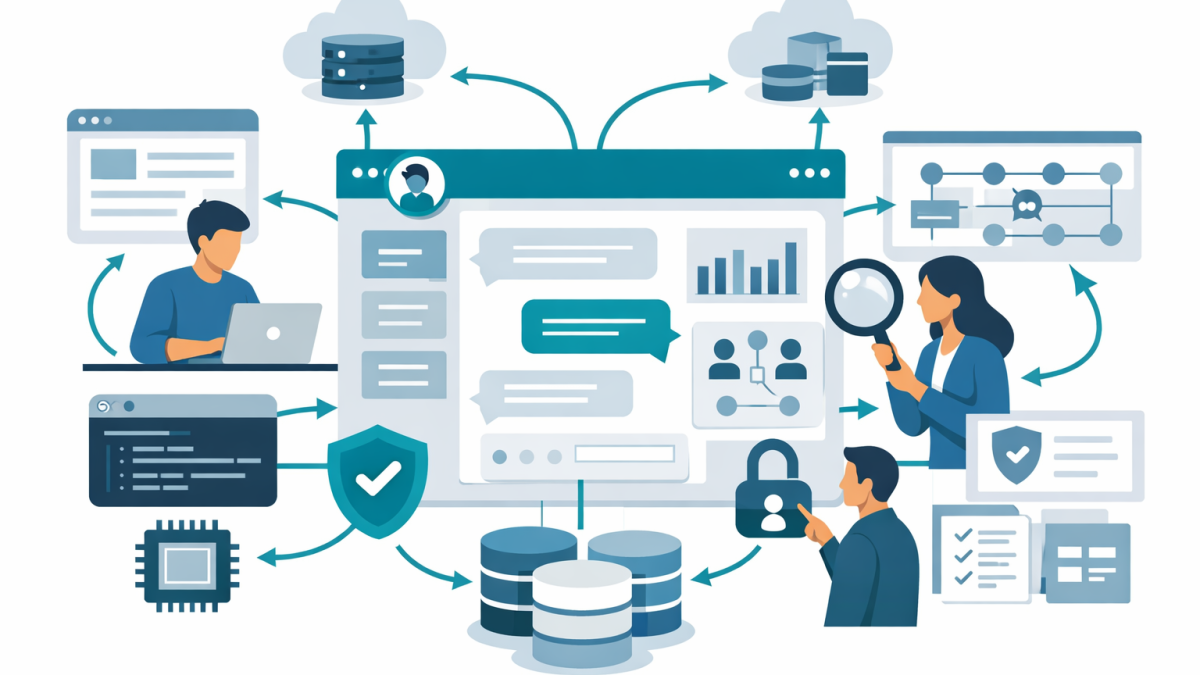
OpenAI is unifying ChatGPT, Codex, browsing, and agentic capabilities into one product surface. They’re explicit about why — a single surface lets them translate model improvements directly into user adoption. Consumer familiarity becomes the on-ramp for enterprise deployment.
When I read that, I didn’t see a superapp. I saw an operating system for agents.
The Operating System Pattern
Think about what made Windows, iOS, and Android dominant. It wasn’t that they were the best at any single task. It was that they provided a unified surface where applications could operate, share context, and be discovered by users who already lived in the ecosystem.
OpenAI is building exactly that, except the “applications” are AI agents and the “desktop” is a conversation.
Codex already has over 2 million weekly users, growing 70% month over month. ChatGPT has 900 million weekly active users. When those two surfaces merge with browsing, memory, personalisation, and tool use, you get something that looks less like a chatbot and more like a runtime environment for intelligent agents.
Enterprise API consumption is already north of 15 billion tokens per minute. That’s not chat volume. That’s programmatic work — agents running workflows, processing documents, generating code, making decisions in production applications.
Why This Matters More Than Model Benchmarks
Every quarter, the AI community debates which model is best on whatever benchmark is fashionable that week. I’ve watched these debates for years, and they almost never predict which technology wins in the enterprise.
What wins in the enterprise is the platform that reduces integration friction. The one that works with existing identity systems, fits into procurement processes, and lets teams ship without rebuilding everything from scratch.
OpenAI’s superapp strategy is designed to win on exactly those dimensions. One account, one billing relationship, one API surface that covers chat, coding, search, image generation, voice, and agent orchestration. For a CIO trying to rationalise AI spend across fifty different teams, that consolidation is enormously attractive.
The risk, of course, is that it’s also enormously dangerous. Single-vendor dependency at the AI layer creates a concentration risk that would make any decent enterprise architect uncomfortable. But that’s a separate conversation from whether the strategy is effective.
The Consumer-to-Enterprise Bridge
Here’s the part that most enterprise-focused analysis misses. OpenAI’s consumer dominance isn’t separate from its enterprise strategy. It is the enterprise strategy.
When 900 million people use ChatGPT in their personal lives, those same people walk into work on Monday and ask why their company’s AI tools aren’t as good. They pull out their phones, use ChatGPT to draft an email or summarise a document, and their IT department loses another small battle in the shadow AI war.
OpenAI is weaponising that dynamic. Consumer adoption creates bottom-up demand. ChatGPT Team and Enterprise editions move that demand into sanctioned, managed environments. The superapp unification makes the transition seamless — same interface, same memory, same agents, but now with enterprise controls, SSO, and data governance.
It’s the same playbook that Slack, Dropbox, and Zoom used. But the difference is that OpenAI’s product surface is also the agent runtime. So when enterprises adopt it, they’re not just buying a communication tool or a file store. They’re adopting the platform where their AI agents will live.
What an Architect Sees
When I look at this through an architecture lens, three things stand out.
First, it’s a control plane for agent orchestration. The unified surface means OpenAI can manage agent lifecycle, permissions, and data access from a single point of governance. That’s not just convenient — it’s architecturally necessary for agents that operate across multiple systems.
Second, it’s a distribution channel for capabilities. Every time OpenAI ships a new model or feature, it lands in the same surface that users already inhabit. No new app to download, no migration to manage, no change management to run. That’s a massive deployment advantage over competitors who ship models that require separate integration work.
Third, it’s a data gravity play. The more tasks users run through the superapp, the more context it accumulates — preferences, workflows, organisational patterns. That context makes the agents more useful, which drives more usage, which deepens the lock-in. It’s the same flywheel that made Google Search and Microsoft Office dominant, but applied to intelligence rather than information retrieval or document creation.
The Uncomfortable Question
The real question for enterprise architects isn’t whether OpenAI’s superapp strategy is smart. It obviously is.
The question is whether your organisation is building the governance, identity, and data architecture that lets you participate in this shift without surrendering control of your AI strategy to a single vendor.
Because OpenAI just told you, in plain language, exactly what they’re building. An operating system for agents. One where the default runtime is theirs, the default identity is theirs, and the default data layer is theirs.
If you don’t have your own architectural answer to that, you’re not making a strategic choice. You’re drifting into dependency.
- Anthropic’s Data Proves Your Team’s AI Fluency Matters More Than the Model You Pick
- OpenAI’s New Prompt Injection Defences Are the Most Important AI Security Work This Year
- OpenAI Hosted on Azure What Microsoft Really Means for Enterprises
- OpenAI Just Bought Promptfoo. That’s a Bigger Deal Than Most People Realise
