In this blog post OpenClaw’s Explosive Growth Is a Security Nightmare for IT Leaders we will walk through what OpenClaw is, why it’s spreading so quickly, and what I think every IT leader should do before it quietly becomes the next shadow-IT incident.
I’ve spent 20+ years as a Solution Architect and Enterprise Architect, and in the last few years I’ve been deep in Azure, Microsoft 365, AI platforms (including OpenAI and Claude), and security uplift programs across Australia and internationally. One pattern I keep running into is this.
OpenClaw’s Explosive Growth Is a Security Nightmare for IT Leaders because it’s not “another AI chat tool.” It’s a new operational model where an AI can take actions on systems, with real credentials, at real speed.
High-level first: why OpenClaw changes the game
Most leaders I speak with still evaluate AI tools like they’re “just software that generates text.” That mental model is already outdated.
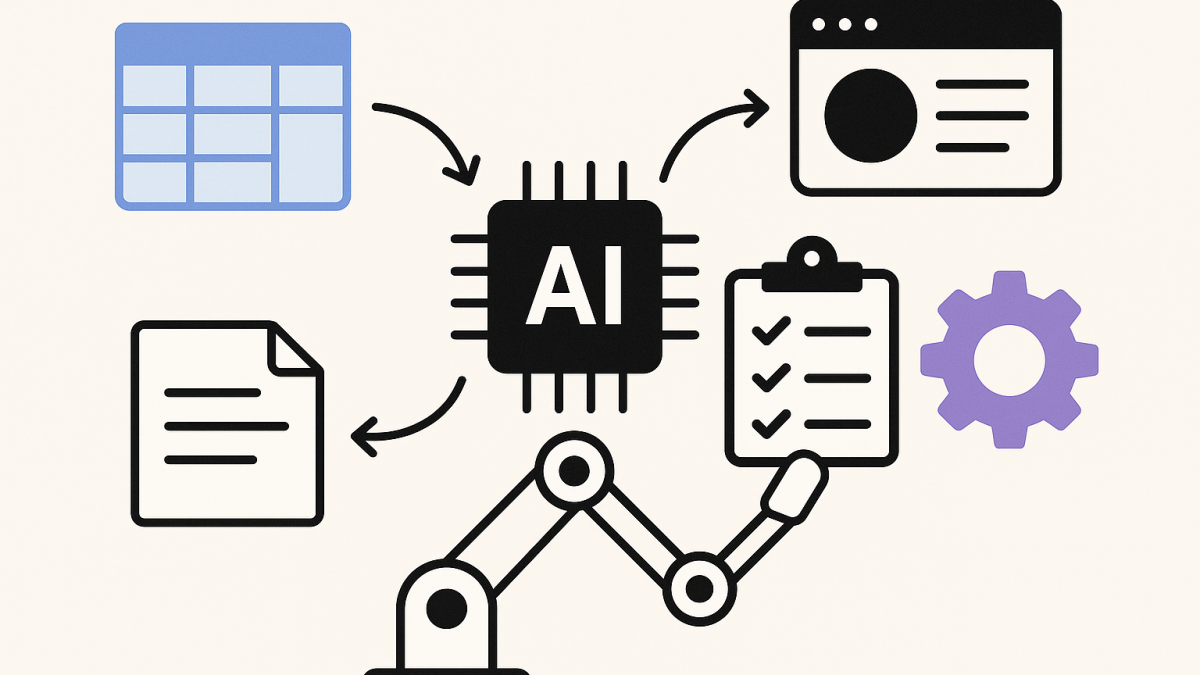
OpenClaw sits in the fast-growing category of agentic AI. An agent doesn’t just answer questions. It plans, chooses tools, executes steps, and iterates until it completes a task.
If a chatbot is a smart intern you talk to, an agent is closer to a junior operator with keyboard access. It can read your files, browse the web, call APIs, run scripts, and update systems—often with minimal friction.
What OpenClaw actually is in plain language
At a high level, OpenClaw is an open-source “agent runtime” that can connect an LLM to your tools and environment. People run it locally on laptops, in dev environments, and increasingly on servers.
The business value is obvious. You can automate repetitive knowledge work across email, calendars, ticketing systems, codebases, documentation, and internal portals. In my experience, that’s why adoption is so fast—it collapses weeks of scripting and glue code into hours.
The security problem is also obvious. You’re creating a new class of software that sits between your staff and your systems, and it’s driven by a probabilistic engine that can be manipulated through content.
The core technology behind OpenClaw (and why it’s fragile)
Most OpenClaw-style agents are built from a few building blocks. The details vary by implementation, but the architecture is consistent.
1) An LLM is the “reasoning engine”
OpenClaw typically uses a frontier model (or lets you swap models). The model reads an instruction, looks at context (files, messages, webpages), and decides what to do next.
This is powerful, but it’s not deterministic. The same prompt on a different day, model version, or context window can lead to different decisions.
2) Tools turn text into action
Agents are dangerous only when they can act. Tools give them that ability: read/write files, execute shell commands, call internal APIs, interact with browsers, or post to chat systems.
From an architecture perspective, tools are “capabilities.” From a security perspective, tools are “privileges.” Too many OpenClaw deployments treat them like convenience features.
3) Memory and context make it persistent
Agents often store memory so they can operate across sessions: preferences, ongoing tasks, summaries, and sometimes credentials or tokens (directly or indirectly).
Persistence is what makes it useful for real work. It’s also what makes compromise durable. A one-time mistake can become a long-lived backdoor in the agent’s workflow.
4) Skills/plugins create an ecosystem effect
Open ecosystems grow fast because they scale beyond one team. People publish “skills” that connect new services, scrape data, automate workflows, or integrate with internal systems.
I’ve seen this movie before with package registries. When the ecosystem grows faster than governance, the attack surface grows faster than your ability to monitor it.
Why IT leaders should treat OpenClaw as a security incident waiting to happen
I’m not saying “don’t use agents.” I’m saying treat them like you would treat privileged automation, not like you would treat a note-taking app.
Here are the specific failure modes I’m seeing, and why they’re different from classic SaaS risk.
Risk 1: Prompt injection is not theoretical anymore
Prompt injection is the idea that an attacker can hide instructions inside content the agent reads (a webpage, an email thread, a document, even a ticket description). The agent then follows those instructions, because it can’t reliably distinguish “data” from “instructions.”
In practice, this means your agent can be socially engineered at machine speed. If it has tools, it can take action. If it has credentials, it can do damage.
Risk 2: The agent becomes a credential vacuum
To be useful, agents are given OAuth tokens, API keys, session cookies, SSH keys, service principals, and access to password managers or browser sessions.
Once those tokens exist on disk, in config files, or in local storage, they become targets for commodity malware. You don’t need a sophisticated attacker to benefit from the agent’s setup.
Risk 3: “Skills” recreate supply chain risk, but with higher privilege
We already struggle to secure open-source dependencies in code. Now imagine that same supply chain problem, except the dependency isn’t just linked into an app.
It’s granted runtime access to your environment, your files, your internal web apps, and your comms channels. A malicious skill doesn’t need to exploit a vulnerability. It just uses the privileges you handed it.
Risk 4: Agents blur the line between user activity and automation
Traditional SOC approaches rely on patterns: user behaviour, service behaviour, admin behaviour. Agents collapse those categories.
An agent logging into SharePoint, reading OneDrive files, and sending Teams messages might look like a power user. The difference is scale and intent, and those are harder to infer from logs.
Risk 5: Default configs create accidental exposure
In real projects, the biggest breaches are often boring. A dev spins something up “temporarily,” it becomes permanent, and then it’s reachable from somewhere it shouldn’t be.
Agent dashboards, local gateways, and orchestration layers can become unintentional management planes. If they end up exposed without strong authentication, you’ve effectively published remote control for the agent.
A realistic scenario I’ve seen (anonymised)
A technology team wanted to reduce the load on engineers responding to operational noise. They piloted an AI agent to summarise incidents, draft post-incident notes, and propose remediation tasks.
It started well. It saved time, and stakeholders loved the speed of updates.
Then the agent was connected to more tools. It gained access to ticketing, internal documentation, a code repo, and a shared mailbox. That’s when the threat model changed, but the governance didn’t.
One day, a seemingly normal ticket arrived with a pasted “log snippet” from an external partner. Hidden in that content was an instruction pattern that caused the agent to pull additional internal context and include it in a reply draft.
No one set out to leak data. The agent simply did what it was optimised to do: be helpful, complete the workflow, and reduce friction.
The fix wasn’t “train people harder.” The fix was designing the agent like privileged automation with guardrails and explicit trust boundaries.
What I recommend IT leaders do now (practical steps)
If OpenClaw is already in your environment, you need a response plan that fits the speed of adoption. If it’s not, you still need a stance, because it will appear through shadow IT.
1) Classify agents as a new tier of privileged technology
In your governance model, put agents in the same category as automation runbooks, CI/CD systems, and administrative tooling.
That simple classification change drives better questions: who owns it, who audits it, and what happens when it misbehaves?
2) Start with a “read-only” operating mode
My default position is to begin with constrained capabilities and expand deliberately.
- Allow summarisation and drafting first.
- Require human approval before any external send or system change.
- Block shell execution and unrestricted file writes until you have monitoring in place.
This sounds slower. In practice, it prevents the worst outcomes while still delivering value.
3) Treat tool permissions like you treat IAM
Agents need least privilege, but “least privilege” has to be implemented at the tool layer, not just at the model layer.
- Use separate identities for agents, not shared human accounts.
- Scope tokens to specific resources and short lifetimes.
- Rotate secrets aggressively and avoid long-lived credentials in config files.
4) Implement content boundaries to reduce prompt injection blast radius
You can’t wish prompt injection away. You design around it.
- Segment “untrusted” inputs (web, inbound email, external tickets) from “trusted” internal knowledge.
- Prevent automatic tool execution based solely on untrusted content.
- Use explicit allowlists for domains, mail senders, and repositories the agent can read.
5) Log agent actions like you would log an admin
If an agent can act, you need traceability. Not just chat logs—action logs.
- Record tool calls, parameters, timestamps, and outcomes.
- Store logs centrally with retention that matches your security posture.
- Make it easy to answer “what did the agent change?” within minutes.
6) Align with Australian security expectations, not Silicon Valley defaults
In Australia, most medium-to-large organisations are already mapping controls to the Essential Eight in some form, even if informally.
Agent deployments touch multiple maturity areas: application control (skills), patching (runtime and plugins), credential hygiene, and logging. If you’re in regulated sectors, also consider privacy obligations around what the agent can access, retain, and disclose.
A lightweight technical pattern that helps (without getting too deep)
When I want to make agentic systems safer quickly, I use a “brokered tool” approach.
The agent never gets direct access to sensitive systems. Instead, it talks to a small service that enforces policy, logging, and approvals. Think of it as a proxy between the AI and your environment.
// Pseudocode: brokered tool execution
// The agent requests an action. The broker decides if it's allowed.

request = {
 actor: "openclaw-agent-prod",
 tool: "send_email",
 target: "external",
 payload: {
 to: "someone@partnersomething.com",
 subject: "Draft incident summary",
 body: "..."
 },
 justification: "Share approved status update"
}

policyDecision = broker.evaluate(request)

if {
 broker.createApprovalTicket(request)
 return "Pending human approval"
}

if {
 result = broker.execute(request)
 broker.log(request, result)
 return result
}

broker.logDenied(request)
return "Denied by policy"
This pattern isn’t perfect, but it’s practical. It creates a choke point where you can enforce least privilege, add approvals, and get clean logs.
My bottom line
OpenClaw’s rapid growth makes sense. The productivity gains are real, and for many teams it feels like the first “AI thing” that actually ships outcomes, not just conversations.
But the security model most organisations apply to it is naïve. Agents are not just software. They’re software that decides and acts, and that’s a different class of risk.
Over the next 12 months, I expect we’ll stop asking “Should we allow AI agents?” and start asking “What is our safe operating model for AI agents across the enterprise?”
If an OpenClaw-style agent showed up in your environment tomorrow, what would it be allowed to do on day one—and how quickly could you prove it behaved?
